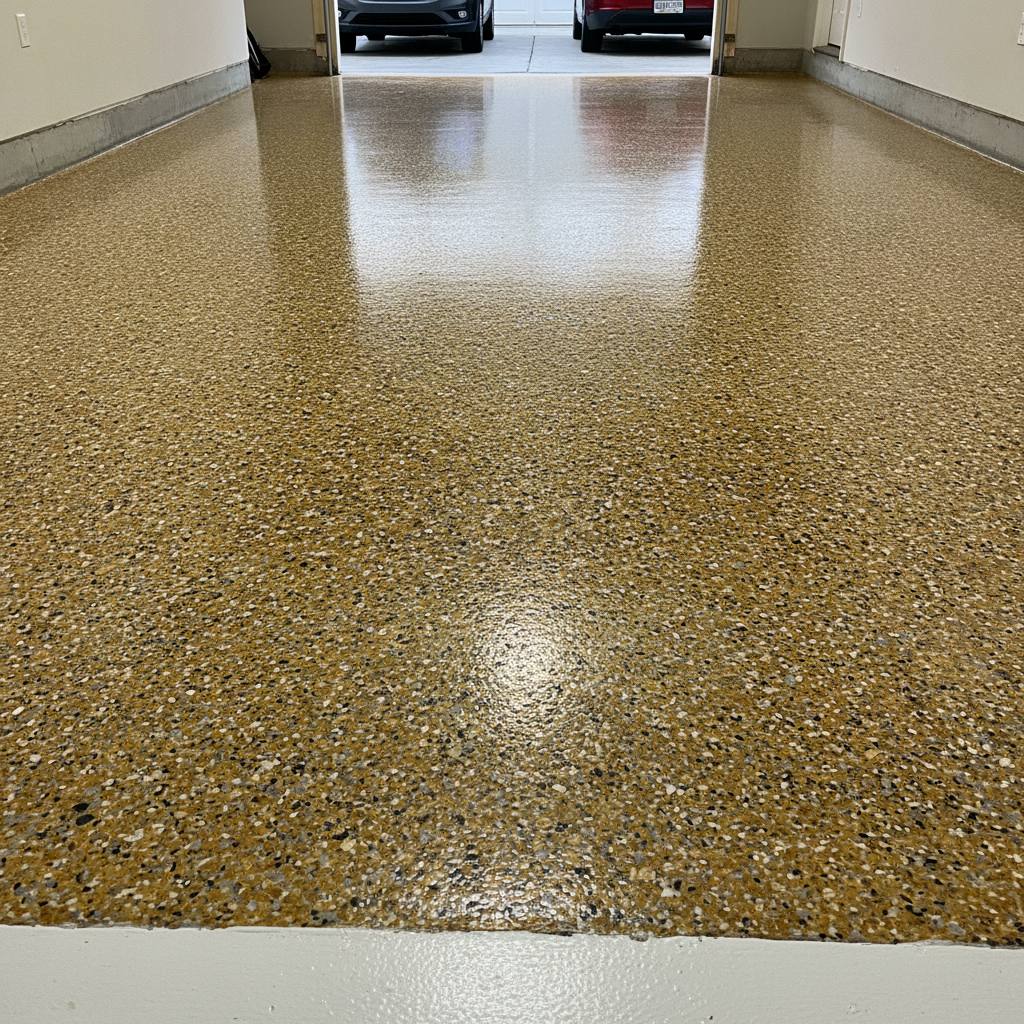
Few states pack as much climate variance into one coating market as California. A garage slab in the Bay Area or coastal LA basin sits under a marine layer that keeps humidity elevated for months at a time. A warehouse floor two hours inland, in the Central Valley, can see summer slab temperatures well past what most coating systems are rated for. Polyurea handles both — but not with the exact same spec.
Along the coast — San Francisco, Oakland, the LA basin, San Diego — persistent marine-layer humidity and elevated slab-moisture readings are the bigger risk to a coated floor. Rising moisture behind a coating is one of the most common causes of blistering, delamination, and adhesive failure, which is why we run calcium chloride or relative-humidity moisture testing before any coating goes down in these regions, and specify a vapor-barrier primer system when readings call for it.
Move inland to Sacramento, Stockton, Fresno, or Bakersfield, and the priority flips. Ambient and slab temperatures climb well above coastal norms, and summer sun exposure is intense and sustained. Here the priority shifts to UV-stable, heat-tolerant polyurea chemistry that stays flexible and doesn't chalk or discolor under sustained high-heat exposure — moisture testing still happens, but it's rarely the deciding factor the way it is on the coast.
Polyurea is an elastomer — flexible across a wide temperature range, fast-curing, and chemically resistant regardless of region. The chemistry itself doesn't change; what changes is the surface prep and system spec: moisture-vapor primer emphasis near the coast, UV-stability emphasis in the Valley and Inland Empire.
California Polyurea specifies every job to its actual region and slab conditions during a free on-site or facility assessment — not a single statewide default. Tell us where in California your project is and we'll walk through what that means for your system.
No obligation. We'll assess your space and give you a real number.